Septic Tank Pumping
Full removal of the accumulated sludge and scum layers so your tank regains its working volume. The core of septic maintenance for any Omaha-area home.
Omaha Septic HQ
Septic pumping, cleaning, inspection, and drain field service across the Omaha metro.
Serving Omaha, NE and the surrounding area.
Areas we cover
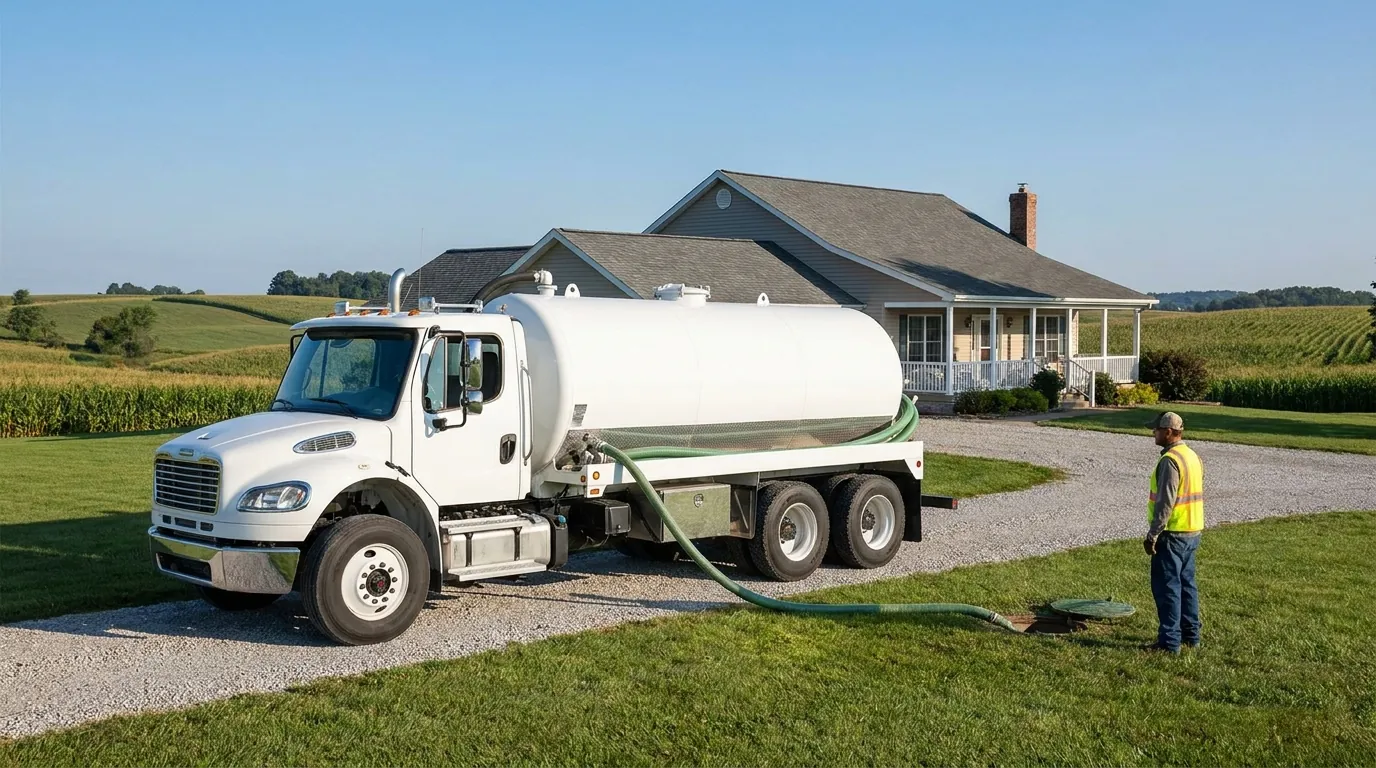
If your home sits on a septic system rather than city sewer, the tank under your yard is doing quiet, constant work — separating solids, floating grease, and passing clarified water out to a drain field. Left alone too long, that balance tips: the solid layer builds up, less space is left for settling, and partly treated waste starts pushing into the drain field where it clogs the soil. Omaha Septic HQ handles the routine pumping and cleaning that keeps that from happening, plus the inspections and repairs that catch trouble early.
This site is written for homeowners on the edges of Omaha and in the surrounding towns where septic is common — properties in and around La Vista, Chalco, Papillion, Bellevue, Gretna, and near Offutt AFB. Lot sizes, tank ages, and household sizes vary a lot out here, and the right pumping schedule for a two-person house on a large acreage is not the right schedule for a full family on a smaller lot. We start by understanding what you actually have in the ground.
The Omaha area also has soil and weather that shape septic work in ways a national chain rarely accounts for. The region's loess soils, the hard freeze-thaw swing between winter and spring, and heavy spring storms all change how a system drains and how often it needs attention. Whether you need a routine septic tank pumping or you're worried about a backup, the goal is the same: keep the system working and keep sewage out of your yard and your house.
Septic systems depend on the ground around them. A drain field only works if the soil can absorb the water the tank sends out, and that ability — soil percolation — varies sharply across the Omaha area. The region's loess soils are fine and wind-deposited; they drain reasonably well when dry but can pack down and slow considerably when saturated. Where a lot sits low or holds water, the effective absorption is lower, and a tank that isn't kept clear will overload the field faster.
Water-table depth matters just as much. During wet stretches, especially after the spring storms that roll through eastern Nebraska, groundwater rises and the surrounding soil fills with water. A drain field trying to release effluent into already-saturated ground has nowhere to send it, which is why many septic backups in this area happen right after heavy rain rather than during a dry summer. Systems near creeks, low fields, or the Missouri River bottoms below Bellevue and Offutt AFB feel this most.
Then there's the freeze-thaw cycle. Omaha winters push frost deep into the ground, and the repeated freezing and thawing can shift shallow tank lids, stress pipe connections, and make a marginal system fail when it's least convenient. Going into winter with a recently pumped tank gives you more working volume and less risk of a frozen, overloaded system in January. Reading the signs your septic tank is full early, and pumping before the ground locks up, is the practical way to stay ahead of all of this.
From scheduled maintenance to urgent problems, here is the work Omaha Septic HQ is set up to handle.
Full removal of the accumulated sludge and scum layers so your tank regains its working volume. The core of septic maintenance for any Omaha-area home.
A look at tank condition, liquid levels, baffles, and drain field signs — useful before a home sale, after a problem, or on a regular cadence.
More thorough than a quick pump-out: cleaning the septic tank of hardened solids and buildup so it functions the way it was designed to.
Attention to the leach field where treated water returns to the soil — the part most damaged by overdue pumping and saturated ground.
For homes and small commercial kitchens where grease loads outpace a standard tank and need separate management.
For backups, alarms, and sewage surfacing in the yard — the situations that can't wait for a scheduled visit.
We focus on Omaha and the surrounding communities where septic systems are common.
A common range is every three to five years, but the right interval depends on tank size, household size, and how well your drain field soil absorbs water. Homes on low or slow-draining lots often need pumping on the shorter end of that range.
Spring storms raise the water table and saturate the surrounding soil, so the drain field has nowhere to release treated water. A tank that's already full pushes waste back toward the house. Keeping the tank pumped reduces that risk.
Omaha and nearby communities including La Vista, Chalco, Papillion, Bellevue, Gretna, and the area around Offutt AFB. Each town has its own soil and terrain quirks, which we account for on every visit.
Yes. We handle scheduled pumping, cleaning, and inspections, and we also respond to urgent problems like backups, alarms, and sewage surfacing in the yard. Describe what's happening when you call so we can prioritize correctly.
Going into winter with a recently pumped tank gives your system more working volume and reduces the chance of a frozen, overloaded system during the deep-frost months. Fall is a good time to get on the schedule.
Whether it's an overdue pump-out, a system inspection before a sale, or a backup that can't wait, reach out and describe what you're seeing. We'll help you figure out the right next step.
Call to talk through your septic system and get on the schedule.
Practical answers to the questions we hear most in Omaha, NE.
What septic tank pumping costs in the Omaha area, the factors that move the price up or down, and how to avoid paying more than you need to.
How often Omaha-area homes should pump a septic tank, the factors that shorten the interval, and how local soil and weather affect the schedule.
The warning signs of a full or failing septic tank for Omaha-area homes, what each symptom means, and when to act before it becomes an emergency.