Septic Tank Cleaning in Omaha, NE
Septic tank cleaning in Omaha and nearby towns. The difference between pumping and cleaning, warning signs, and how loess soil affects the job.
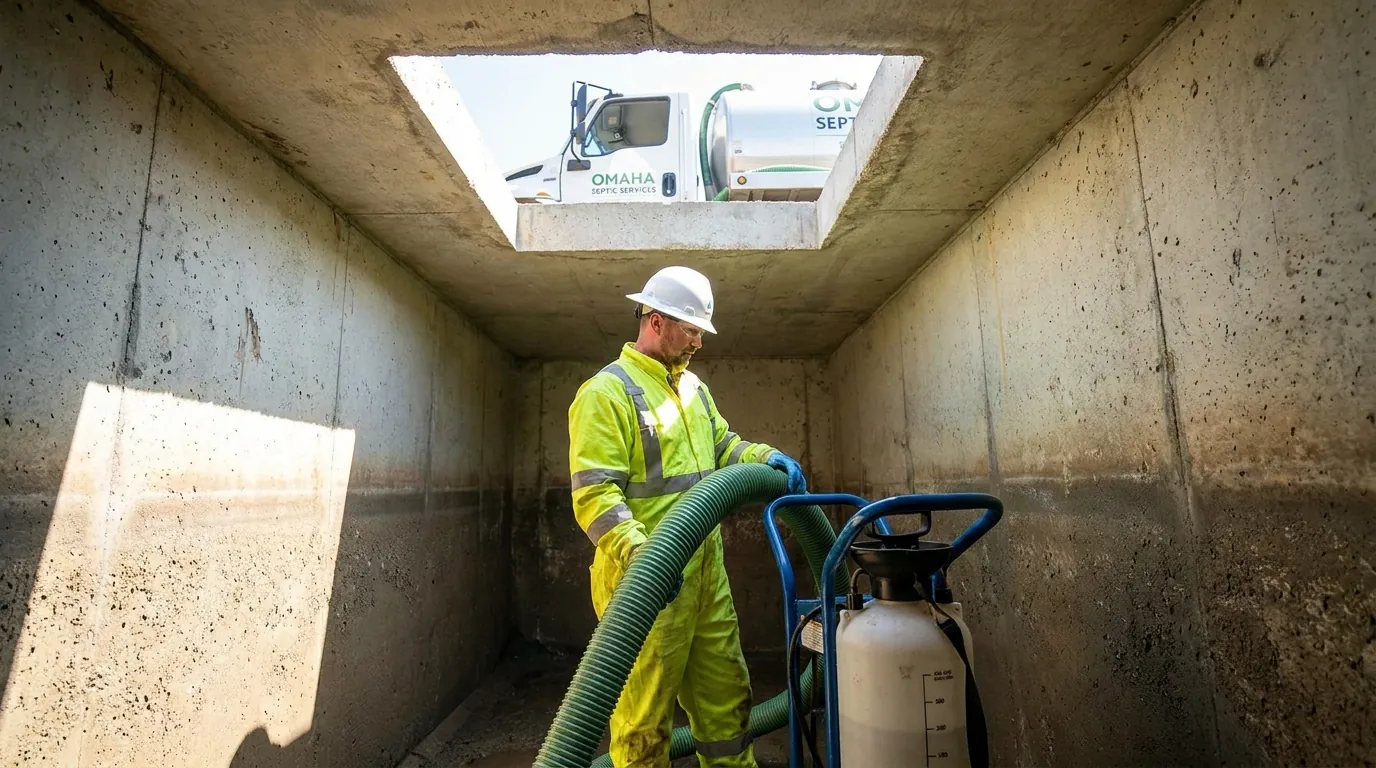
Cleaning versus pumping
People use the terms interchangeably, but there is a real difference. Pumping removes the liquid and the loose sludge that comes up easily. Cleaning a septic tank goes further: the compacted sludge on the bottom and the caked scum on the walls are loosened and removed so the tank starts fresh. Over years, that hardened layer builds up even in a tank that gets pumped, and it steadily reduces the working volume of the tank.
Cleaning the septic tank matters most when a tank has gone a long time between services, when solids have started reaching the drain field, or when an inspection shows heavy buildup that a routine pump will not clear. In Omaha's slow-draining loess soils, keeping the tank's full capacity available gives effluent more time to settle before it heads to the field, which protects the part of the system that is hardest to replace.
Signs your tank needs a full cleaning
If drains stay slow soon after a pumping, if backups keep returning, or if an inspection finds thick, hardened sludge, a simple pump is not enough. A tank that has never been fully cleaned, or one on a property with an unknown service history, is a good candidate. Odors that linger and a drain field that stays soggy can both trace back to a tank that is no longer holding its rated volume.
Cleaning is usually done alongside septic tank pumping, since the tank has to be emptied first. If the trouble turns out to be downstream, our drain field service explains what a struggling field needs, because a spotless tank cannot rescue a field that has already failed.
How cleaning a septic tank works
Cleaning builds on a standard pumping and adds the work of removing what a pump leaves behind.
-
Pump out liquid and loose solids
The vacuum truck first removes everything that comes up easily, exposing the compacted material on the bottom and walls.
-
Break up compacted sludge
The hardened bottom layer is loosened, often by adding water and agitating, so it can be drawn into the truck rather than left in place.
-
Rinse the walls and baffles
Caked scum on the interior walls and around the baffles is washed down and removed, restoring the tank's working volume.
-
Inspect while empty
A clean, empty tank is the clearest moment to check baffles, the effluent filter, and the walls for cracks or corrosion.
-
Backfill and set the next interval
Lids are resealed and we recommend a service interval based on how much buildup we found, so the tank does not reach this point again.
Why Omaha conditions favor a thorough clean
In sandy soils, a field recovers quickly and forgives a tank running below capacity. Loess is different: it drains slowly and stays wet longer after the spring storms that soak La Vista, Chalco, and the surrounding area. A tank at full working volume gives solids more time to settle out before effluent reaches that slow field, and a full cleaning restores volume that routine pumping alone does not.
The freeze-thaw cycle also argues for cleaning ahead of winter rather than during a cold-weather emergency. Digging out a frozen lid to deal with a tank that has been neglected for years is the worst time to discover how much buildup is in there. A thorough clean before the ground locks up removes that risk.
Schedule septic tank cleaning
If it has been years since your tank was serviced, or backups keep coming back, a full cleaning may be what it needs.
Serving Omaha, La Vista, Chalco, Papillion, Bellevue, Gretna, and Offutt AFB.
Frequently asked questions
What is the difference between cleaning and pumping a septic tank?
Pumping removes the liquid and loose sludge. Cleaning also breaks up and removes the hardened sludge on the bottom and the caked scum on the walls, restoring the tank's full working volume.
How often does a tank need cleaning rather than just pumping?
Many tanks do fine with routine pumping, but a full cleaning is worth it when buildup is heavy, service history is unknown, or backups keep returning. An inspection tells you which one your tank needs.
Does cleaning the septic tank remove the good bacteria?
The bacteria that break down waste live throughout the system and repopulate quickly from normal household use. There is no need to add starter products after a cleaning.
Can cleaning fix a soggy drain field?
No. Cleaning restores the tank, but a field that has already failed needs its own attention. Cleaning can slow further damage by keeping solids out of the field going forward.