Septic System Inspection in Omaha, NE
Septic system inspection in Omaha and nearby towns. Find leaks, failing baffles, and drain field trouble before they turn into costly septic system repair.
When an inspection is worth it
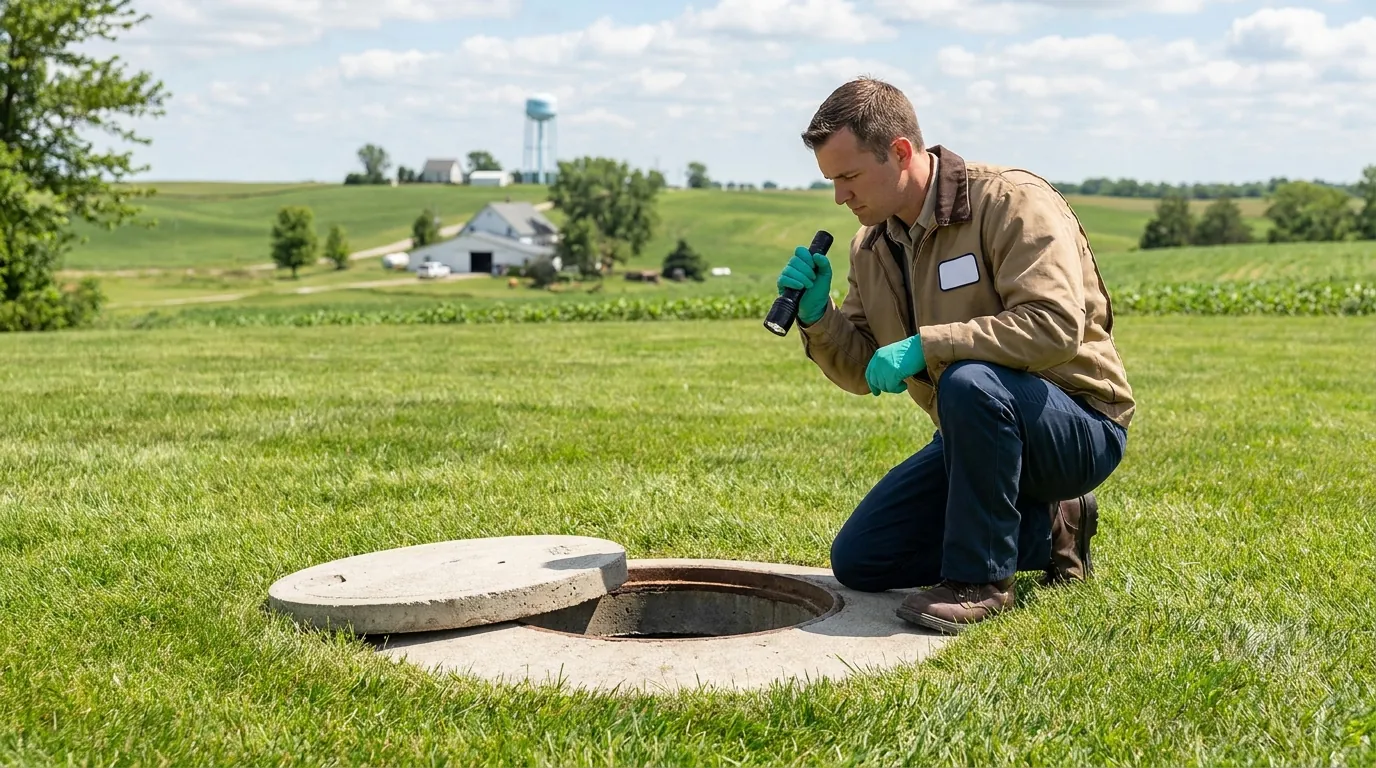
A septic system inspection answers a simple question with real consequences: is the system working, and what will it need soon? Homeowners book one before buying or selling a property, after a backup, when the drain field looks soggy, or simply to plan ahead instead of reacting to a failure. Because so much of a septic system is buried, an inspection is the only way to see whether small problems are quietly heading toward a full septic system repair.
In the Omaha area, systems face pressures that speed up wear. Loess soil drains slowly, the water table rises with spring storms, and the freeze-thaw cycle stresses shallow pipe. An inspection catches the failing outlet baffle, the cracked lid, or the drain field that no longer accepts effluent while the fix is still small. Catching these early is far cheaper than replacing a saturated field.
Signs you should schedule an inspection
Slow drains, gurgling toilets, sewage smells, or wet ground over the tank and field all point to something an inspection can identify. So does buying a home whose septic history is unknown, or a system that has never been documented. If you have had repeated backups even after pumping, the problem is usually past the tank, and only a full look tells you where.
An inspection often pairs naturally with septic tank pumping, because an empty tank is the best time to examine the baffles and interior walls. If the inspection points toward the field rather than the tank, our drain field service page explains what happens next.
What we check during an inspection
A complete inspection covers the whole system, not just the tank lid.
-
Locate the system and access points
We find the tank, inspection ports, and the drain field so the whole system can be assessed rather than guessed at.
-
Measure sludge and scum levels
Layer thickness tells us whether the tank is overdue and whether solids have been reaching the drain field.
-
Examine baffles, lids, and the tank
Inlet and outlet baffles, the effluent filter, and the tank walls are checked for cracks, corrosion, and missing parts that let solids escape.
-
Evaluate the drain field
We look for surfacing effluent, spongy ground, and odors that signal a field struggling to accept liquid, which is common in slow-draining local soils.
-
Report findings and priorities
You get a plain-language summary of what is fine, what needs watching, and what needs repair, so you can decide what to do next.
How local conditions shape what we find
Omaha's loess silt drains slowly, so a field that would look healthy in sandy ground may show early saturation here. During and after the spring storm season across Papillion, Gretna, and Bellevue, a rising water table can make a marginal field appear failed when it is simply overwhelmed, so timing and interpretation matter. A good inspection accounts for the weather at the time of the visit.
Winter freeze-thaw heaves shallow lines and can crack older concrete lids, both of which turn up during inspection. If we find the tank sound but the field failing, pumping alone will not fix it; if the tank is the problem, a repair is often straightforward. Knowing which side of that line you are on is the whole point of the visit.
Book a septic system inspection
Whether you are buying, selling, or troubleshooting a backup, an inspection tells you where the system really stands.
Serving Omaha, La Vista, Chalco, Papillion, Bellevue, Gretna, and Offutt AFB.
Frequently asked questions
How long does a septic inspection take?
Most residential inspections take one to two hours, depending on access and whether the tank is pumped as part of the visit. Locating a system with no documented lids adds time.
Should I pump the tank before or during an inspection?
Pumping during the inspection is ideal, because an empty tank lets us see the baffles and interior walls clearly. Many homeowners combine the two visits to save a trip.
Can an inspection prevent septic system repair?
It cannot prevent wear, but it catches failing baffles, cracks, and early field trouble while the fix is small. Acting on findings early is what keeps a minor issue from becoming a major repair.
Do I need an inspection when buying a home?
It is strongly advised for any home on septic. A buried system can hide serious problems, and an inspection tells you what you are inheriting before closing.