Drain Field Service in Omaha, NE
Drain field service in Omaha and nearby towns. Spot a failing leach field early and learn how loess soil and spring storms affect the fix.
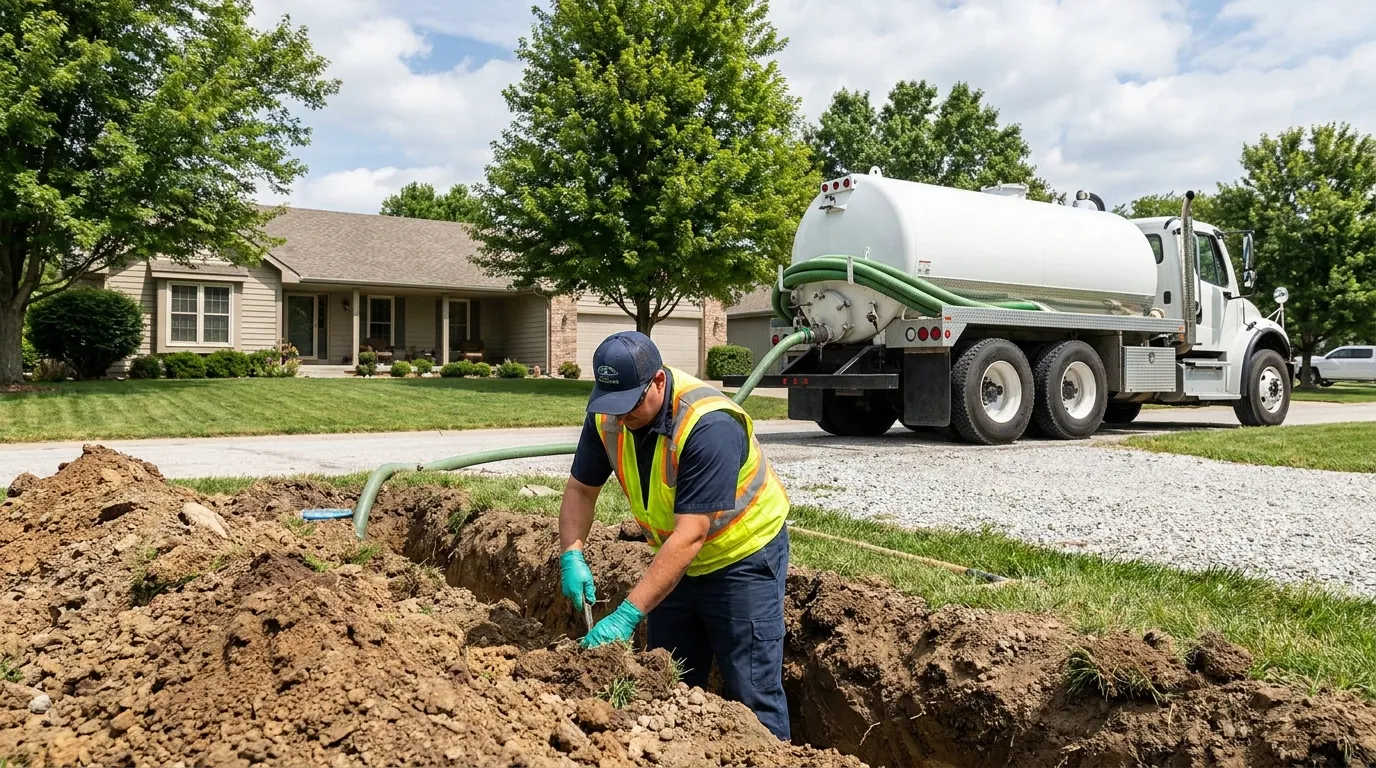
What the drain field does and why it fails
The drain field, or leach field, is where liquid leaving the tank soaks back into the soil and gets a final round of natural treatment. It is the most expensive and least visible part of a septic system, and it fails for predictable reasons: solids escaping a neglected tank clog the soil, too much water overwhelms it, or the ground simply cannot accept effluent as fast as the household produces it. Once the soil around the trenches is sealed with a biological mat, the field can no longer breathe.
In the Omaha area, the field is under extra pressure. Loess soil drains slowly to begin with, and when spring storms raise the water table, the field has nowhere to send the liquid. That is why a marginal field often fails first in a wet spring. Drain field service focuses on relieving that load and, where possible, restoring the soil's ability to accept water before the whole field has to be replaced.
Warning signs of a failing field
The tell-tale signs are wet, spongy ground or surfacing sewage over the field, grass that is greener and grows faster there than anywhere else, and odors outdoors. Inside, you may see slow drains and backups that return quickly after pumping, because the tank fills back up when the field cannot take its water. If pumping helps for only a few weeks, the field is usually the real problem.
The first step is almost always a septic system inspection to confirm the field is the cause and not a failing tank baffle. Keeping the tank pumped with regular septic tank pumping is also essential, because nothing shortens a field's life faster than solids escaping the tank.
How we approach drain field trouble
Field work starts with diagnosis, then relieves the load before considering bigger measures.
-
Confirm the field is the problem
We verify that solids are not escaping the tank and that the field itself, not the outlet baffle, is causing the backup or surfacing.
-
Pump the tank to relieve load
Emptying the tank stops solids from reaching the field and buys time to assess how the field recovers once the load is reduced.
-
Reduce water reaching the field
We identify sources of excess water, from a rising water table to household overuse, that keep the field saturated and slow its recovery.
-
Assess recovery and next steps
After the load is reduced, we watch whether the field recovers or stays saturated, which tells us whether it needs rest, further work, or replacement.
How Omaha soil and weather shape the outcome
Loess silt is the defining local factor. It holds water and drains slowly, so a field that would recover quickly in sand can stay waterlogged here for a long time after the spring storms move through Bellevue, Gretna, and Papillion. During a wet stretch the same field may look failed and then partly recover as the ground dries, which is why we assess a field over time rather than condemning it on a single soggy day.
The freeze-thaw cycle adds long-term stress by heaving shallow trenches and shifting the soil around the lines. Managing water use during the wettest weeks, keeping the tank pumped, and diverting surface runoff away from the field all extend its life. When a field has truly failed, no amount of pumping restores it, but catching trouble early often means the difference between a repair and a full replacement.
Get help with a struggling drain field
If backups keep returning or the ground over your field stays wet, let us confirm the cause and relieve the load.
Serving Omaha, La Vista, Chalco, Papillion, Bellevue, Gretna, and Offutt AFB.
Frequently asked questions
Why does my field back up after every rain?
Omaha's loess soil drains slowly, and spring storms raise the water table, so a saturated field cannot accept effluent. When the field cannot take the water, the tank fills and backs up toward the house.
Can a failed drain field be repaired?
Sometimes early trouble can be relieved by reducing the load and letting the soil recover, but a field sealed by a heavy biological mat often needs more extensive work or replacement. An inspection determines which situation you are in.
Will pumping the tank fix my drain field?
Pumping relieves the immediate backup and stops more solids from reaching the field, but it does not restore soil that has already failed. It is a necessary first step, not a cure for a failed field.
How can I extend the life of my drain field?
Keep the tank pumped on schedule, spread out heavy water use, divert roof and surface runoff away from the field, and avoid driving or parking over it. In slow-draining local soil, reducing water load is especially important.