Grease Trap Pumping in Omaha, NE
Grease trap pumping for Omaha-area restaurants and kitchens. Warning signs, how the service works, and why local conditions call for a steady schedule.
Why grease traps need a steady schedule
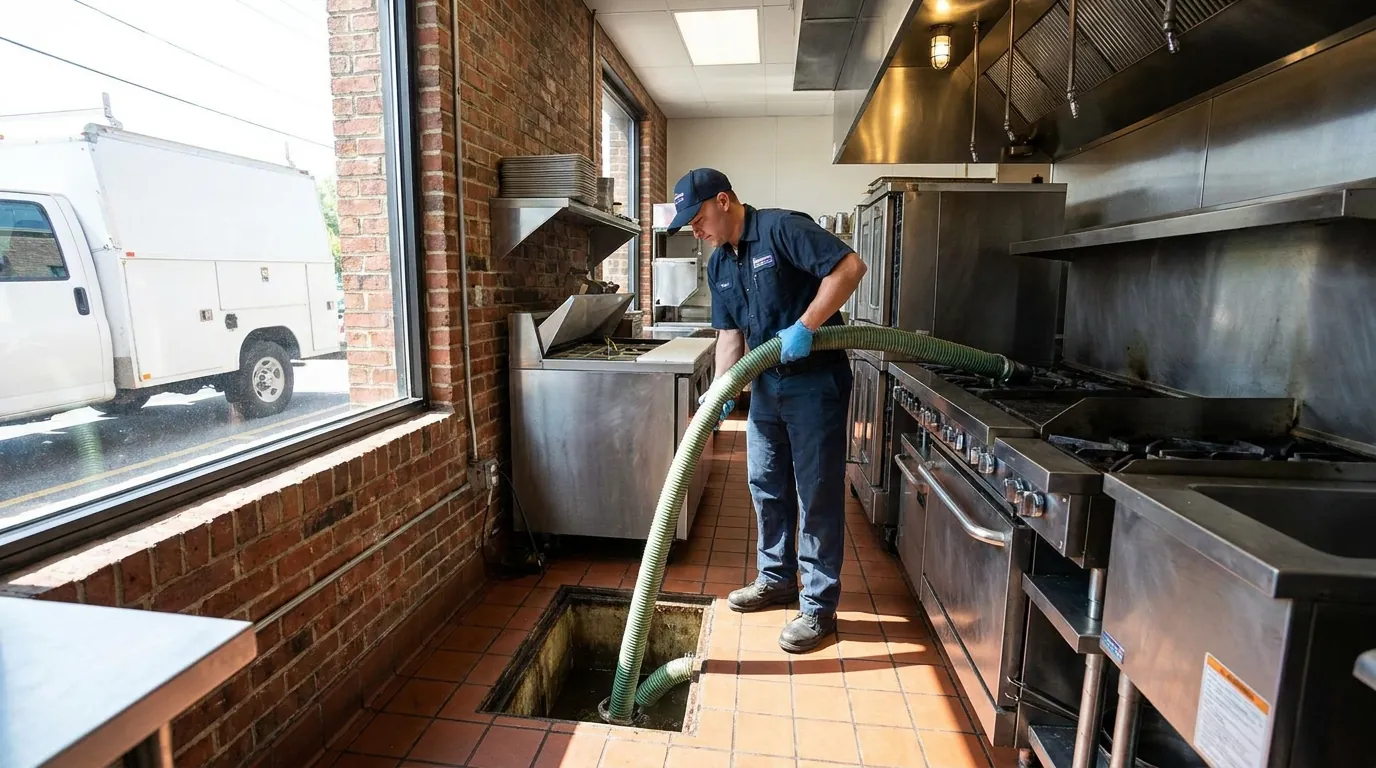
A grease trap catches the fats, oils, and grease that leave a commercial kitchen before they reach the sewer or septic system, where they would harden and clog the lines. As the trap fills, that grease layer thickens and the trap loses its ability to separate waste. Left too long, grease carries past the trap and into pipes that are far harder and more expensive to clear. Regular grease trap pumping keeps the trap doing its job.
For kitchens around Omaha, La Vista, and Papillion, a consistent schedule matters more than a reactive one. A trap on a busy line fills faster than the calendar suggests, and a missed service tends to reveal itself at the worst moment, during a rush. Setting the interval to your kitchen's real volume prevents the slow drains and odors that come with an overfull trap.
Signs your grease trap is overdue
Slow-draining kitchen sinks, grease odors near the trap or floor drains, and visible grease backing up are all signs the trap is full and no longer separating waste. A trap that needs pumping more and more often may be undersized for the kitchen's volume, which is worth flagging before it causes a backup.
For properties on septic, grease that escapes the trap ends up in the tank, so grease trap service and septic tank pumping work together to protect the whole system. If you are unsure how your kitchen's plumbing connects to the tank and field, a septic system inspection can map it out.
How grease trap pumping works
The visit is quick when the trap is on a regular schedule and access is clear.
-
Open and inspect the trap
We open the trap and check the grease and solids levels along with the condition of the baffles and interior.
-
Pump out the contents
The full contents, grease, solids, and water, are removed with a vacuum truck and hauled to an approved disposal site.
-
Scrape and clean surfaces
Caked grease on the walls and baffles is scraped and removed so the trap starts fresh rather than refilling immediately.
-
Check and reseal
We confirm the baffles and lid are sound, reseal the trap, and note the levels found to help set the right interval.
Local factors that affect the schedule
Grease behaves differently as temperatures swing, and Omaha's cold winters make grease firm up faster in lines and traps. A trap that flows fine in summer can clog more readily in a January cold snap, so heading into winter with a freshly serviced trap reduces the risk of a cold-weather backup. That timing is worth building into your schedule.
For rural kitchens and properties on septic around Gretna and Bellevue, the trap is the first line of defense for a system already working against slow-draining loess soil. Keeping grease out of the tank means fewer solids reaching the drain field, which in slow local soils is exactly what you want to protect.
Set up grease trap service
Tell us your kitchen's volume and trap size, and we will help set a pumping interval that keeps drains clear.
Serving Omaha, La Vista, Chalco, Papillion, Bellevue, Gretna, and Offutt AFB.
Frequently asked questions
How often should a grease trap be pumped?
It depends on the trap size and how much grease your kitchen produces. A busy kitchen may need service every few weeks, while a lighter one goes longer; the right interval is set to your real volume.
What happens if a grease trap is not pumped?
Grease carries past the trap into the plumbing, where it hardens and clogs the lines. That leads to slow drains, backups, and odors, and clearing the downstream pipes costs far more than routine pumping.
Does grease trap service matter for septic systems?
Yes. On septic, grease that escapes the trap reaches the tank and drain field, where it causes buildup. Keeping the trap serviced protects the whole system, especially in slow-draining local soil.
Why does my trap seem to fill faster in winter?
Cold temperatures firm up grease so it separates and accumulates faster, and it clogs lines more readily. Servicing the trap heading into Omaha's winter reduces the chance of a cold-weather backup.