Septic Emergency Service in Omaha, NE
Septic emergency service in Omaha and nearby towns. What counts as an emergency, what to do first, and how storms and freeze can trigger backups.
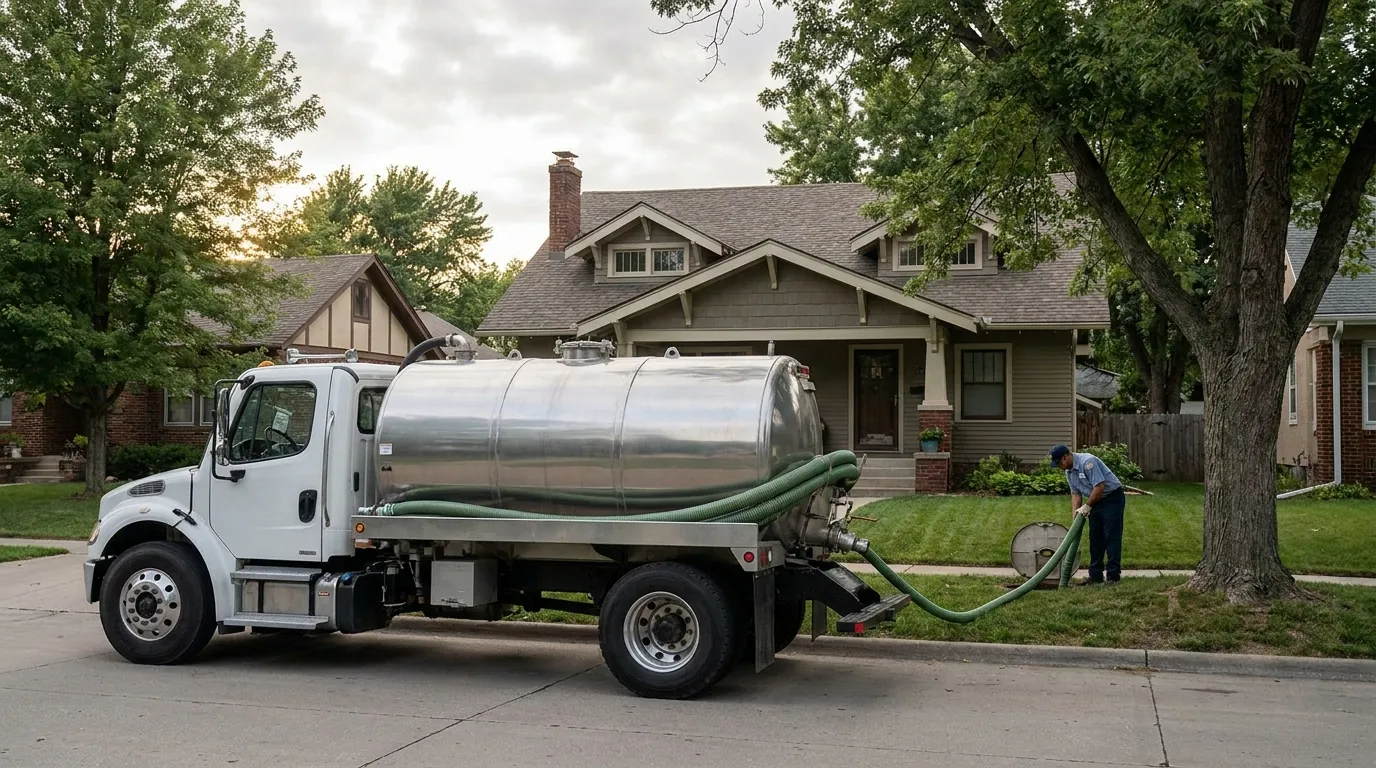
What counts as a septic emergency
A septic emergency is any situation where waste is backing up into the home, sewage is surfacing in the yard, or drains have stopped entirely. These are health hazards, not inconveniences, and they get worse the longer they sit. A backup into a bathtub or basement floor drain, a strong sewage odor with no drainage, or standing sewage over the drain field all warrant a fast response rather than waiting for a routine appointment.
In the Omaha area, emergencies cluster around two conditions: the spring storm season, when a rising water table pushes a marginal drain field over the edge, and hard winter freezes, when frost reaches shallow lines and lids. Knowing what triggered the backup helps get the system working again quickly, and it points to what needs to change so it does not repeat.
What to do while you wait
Stop using water immediately. Every flush, load of laundry, and shower adds to a system that already cannot handle it, so shutting off water use keeps the backup from spreading. Keep people and pets away from any surfacing sewage, and do not attempt to open a frozen or sealed tank lid yourself. If you know where your septic access is, clearing a path to it saves time when help arrives.
Many emergencies are resolved by pumping the tank to relieve the immediate backup, which our septic tank pumping service handles. Once the crisis is under control, a septic system inspection finds the underlying cause so the same failure does not return with the next storm.
How we handle an emergency call
The goal is to stop the immediate hazard first, then find the cause.
-
Assess the situation
We identify whether the backup is at the tank, the baffle, or the drain field, so the right action relieves the problem instead of masking it.
-
Relieve the backup
Pumping the tank usually stops sewage from backing into the home or surfacing outdoors, buying time to address the root cause.
-
Identify the trigger
We look at what set the emergency off, whether a full tank, a failing field, a frozen line, or storm saturation, so it can be prevented.
-
Plan the follow-up
Once the hazard is contained, we recommend the repair or field work needed to keep the same backup from returning.
How Omaha weather drives emergencies
The two hardest seasons for local septic systems are wet spring and deep winter. When spring storms soak the loess soil around La Vista, Bellevue, and Offutt AFB, the water table climbs and a drain field that was barely coping can no longer accept effluent, forcing the tank to back up. These backups often arrive in clusters right after a heavy rain.
Winter brings the opposite problem. The freeze-thaw cycle and frost that reaches shallow lines and lids can slow or block flow, and a lid frozen shut turns a simple pump into a dig-out. A tank kept pumped on schedule and access that is easy to reach are the two things that most reduce the odds of a cold-weather emergency. If your field is the recurring culprit, our drain field service page explains the longer-term fix.
Have a septic backup right now?
Stop using water and reach out. Tell us what you are seeing so we can respond to the situation as fast as possible.
Serving Omaha, La Vista, Chalco, Papillion, Bellevue, Gretna, and Offutt AFB.
Frequently asked questions
What should I do the moment my septic backs up?
Stop all water use right away, keep people and pets away from any surfacing sewage, and reach out for service. Every flush and load of laundry adds to a system that already cannot cope.
Why do backups happen after heavy rain in Omaha?
Spring storms raise the water table, and the slow-draining loess soil cannot move the water away. A saturated drain field stops accepting effluent, so the tank fills and backs up toward the house.
Can a frozen septic system cause an emergency?
Yes. In deep winter, frost can reach shallow lines and lids and slow or block flow, and a lid frozen shut complicates access. Keeping the tank pumped and access clear before winter reduces this risk.
Will pumping fix the emergency for good?
Pumping relieves the immediate backup, but it may not fix the underlying cause. Once the hazard is contained, an inspection identifies whether a failing field, a bad baffle, or overuse set it off so it does not recur.